
Managing Autoimmune Flare-Ups
Early Warning Signs to Watch For
7/4/20263 min read
Managing Autoimmune Flare-Ups: Early Warning Signs to Watch For
If you live with a chronic autoimmune condition, you already know that symptoms rarely stay at a steady baseline. Most autoimmune diseases move through periods of relative calm and periods of flare — and learning to recognize the early signals of a flare can make a real difference in how you manage it. Here's what to watch for and why it matters.
What Is a Flare, Exactly?
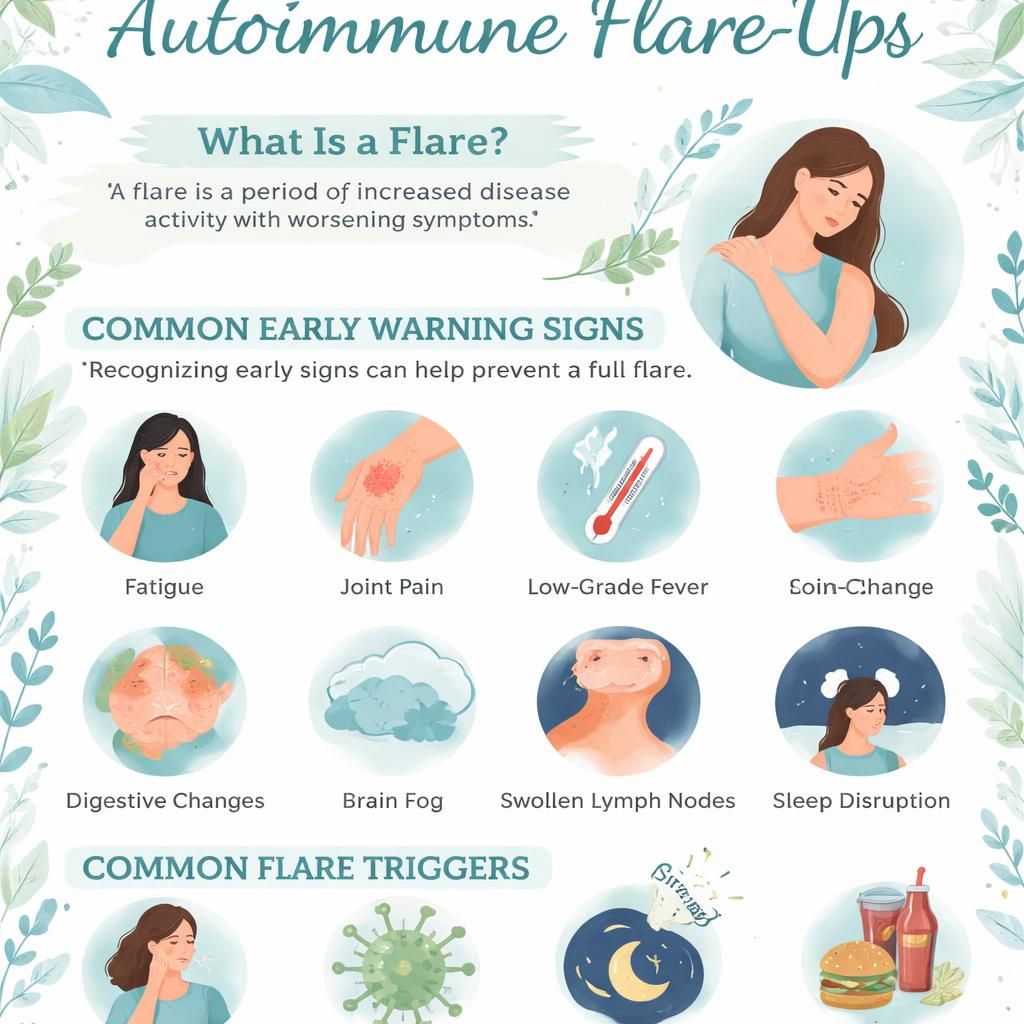
A flare is a period when disease activity increases and symptoms worsen, often after a stretch of feeling relatively stable. Flares can range from mild and short-lived to severe enough to require medical attention. The exact triggers and patterns vary by condition and by person, but many autoimmune diseases — rheumatoid arthritis, lupus, psoriasis, Hashimoto's, inflammatory bowel disease, and others — share some common early warning signs.
Common Early Warning Signs
Fatigue that feels different from normal tiredness Many people describe pre-flare fatigue as heavier or more sudden than everyday tiredness — the kind that isn't fixed by a good night's sleep.
Increased joint or muscle pain New stiffness, aching, or swelling — especially if it's in a pattern you recognize from past flares — is often one of the earliest signals.
Low-grade fever or feeling "off" A subtle rise in temperature or a general sense of being unwell, without an obvious cause like a cold, can precede a flare by a day or more.
Skin changes Rashes, redness, or flare-specific skin patterns (like the psoriasis plaques or the lupus "butterfly rash") can intensify or reappear before other symptoms catch up.
Digestive changes For conditions like inflammatory bowel disease, changes in bowel habits, cramping, or appetite are often the first sign something is shifting.
Brain fog or mood changes Increased difficulty concentrating, memory lapses, or unexplained mood changes are reported by many people as an early flare signal, particularly with lupus and MS.
Swollen lymph nodes Tender or swollen glands, particularly in the neck, can be an early sign of increased immune activity.
Sleep disruption Trouble falling or staying asleep — separate from fatigue itself — is a pattern some people notice reliably before a flare.
Common Flare Triggers
While triggers vary by person and condition, some of the most frequently reported include:
Physical or emotional stress
Illness or infection
Poor sleep
Overexertion
Dietary changes or specific food sensitivities
Hormonal shifts
Sudden weather or temperature changes
Skipping medications or supplements
Why Catching Early Signs Matters
Recognizing a flare in its early stages gives you more options: adjusting rest and activity, reaching out to your care team sooner, and — for many people — reducing the severity or length of the flare compared to waiting until symptoms are already severe.
Building Your Own Early Warning System
Because flare patterns are so individual, one of the most useful things you can do is track your own. Consider keeping a simple log of:
Sleep quality and hours
Stress levels
Diet and any new foods
Energy levels
Any new or changing symptoms, even minor ones
Over a few months, patterns often start to emerge that are unique to you — your own personal early warning signs, ahead of the more obvious symptoms.
When to Seek Medical Care
Early warning signs are useful for day-to-day self-management, but some symptoms warrant prompt medical attention rather than watchful waiting — including high fever, chest pain, difficulty breathing, sudden severe swelling, or any new neurological symptoms like vision changes, confusion, or weakness. If you're ever unsure whether what you're experiencing is a routine flare or something more serious, it's always worth checking in with your physician.
How We Can Help
Tracking your patterns and supporting your body during both calm periods and flares is exactly the kind of ongoing work we do together in follow-up visits — refining your protocol as your own early warning signs become clearer, alongside the care you're receiving from your medical team.
This post is for general education and isn't a substitute for medical advice. If you're experiencing a flare or new symptoms, please consult your physician or specialist.
Renew Life Clinic
Applied kinesiology and clinical protocols for chronic Lyme and autoimmune recovery.
Home-Services-About-Contact
The Practice
renewlifeclinicsupport@gmail.com
Appointments by referral & scheduling
© 2025 Renew Life Clinic Natural Medicine. -Clinical natural medicine for complex chronic conditions.
Neurological Biofeedback & Clinical Protocols