
Top 10 Supplements for Lyme Disease Support
Explore 10 targeted supplements — from antimicrobial botanicals to gut and energy support — that may help the body cope with Lyme disease and co-infections.
7/6/20263 min read
Top 10 Supplements for Lyme Disease Support
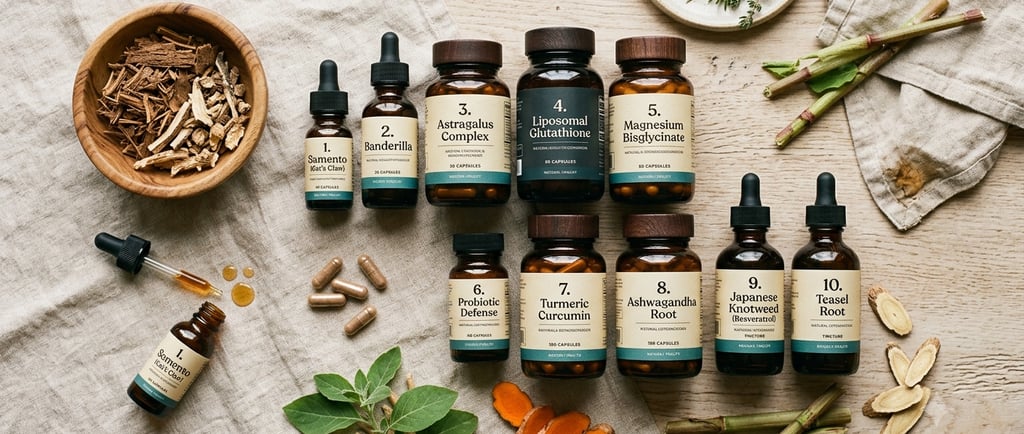
Lyme disease can take a real toll on the body — inflammation, immune strain, and nutrient depletion often follow both the infection itself and standard treatment. While supplements are never a replacement for proper diagnosis and antibiotic care when needed, many patients and integrative providers use targeted nutritional support alongside conventional treatment to help the body cope and recover. Here are 10 of the most commonly discussed options.
1. Stabilized Allicin The active compound in garlic, allicin has long been used in herbal Lyme protocols (including Buhner-style approaches) for its antimicrobial properties, particularly around Bartonella co-infection support. "Stabilized" forms are designed to survive digestion better than raw garlic.
2. Andrographis Extract A staple of traditional Southeast Asian and Ayurvedic medicine, andrographis is one of the more frequently cited herbs in Lyme-literate protocols for its immune-modulating and anti-inflammatory activity. Note: it can have a mild blood-thinning effect, so it's worth flagging to your provider if you're on anticoagulants.
3. Broccoli Sprout Extract (Sulforaphane) Sulforaphane is a potent activator of the body's Nrf2 antioxidant pathway, supporting the liver's natural detoxification processes — helpful given the detox load that comes with chronic infection and antimicrobial treatment.
4. Coenzyme Q10 (CoQ10) CoQ10 supports mitochondrial energy production at the cellular level, which is often why it's included in protocols targeting the fatigue and low energy so common with Lyme disease.
5. Organic Ashwagandha Extract An adaptogen traditionally used to help the body modulate its stress response. Many Lyme patients are dealing with a taxed HPA axis (the stress-hormone system), and ashwagandha is commonly included for that reason. It can affect thyroid hormone levels, so it's worth a conversation with your provider if you have a thyroid condition.
6. Red Peony Root Extract Used in Traditional Chinese Medicine for its anti-inflammatory and circulation-supporting properties, red peony root shows up in a number of integrative Lyme protocols aimed at easing joint and tissue inflammation.
7. Wormwood Extract (Artemisia) A traditional antiparasitic herb often used in protocols addressing Babesia, a common tick-borne co-infection. Wormwood is potent and is typically cycled rather than used continuously — professional guidance is especially important here.
8. Black Walnut Hull Extract Another traditional antimicrobial/antiparasitic botanical frequently paired with wormwood in co-infection protocols, valued for its tannin content.
9. Fo-Ti (He Shou Wu) Root Extract A classic Chinese tonic herb traditionally used to support liver and kidney function, along with hair, energy, and general vitality — relevant given how much organ support matters during extended treatment. Fo-Ti should be used under guidance, as unprocessed or excessive amounts have been linked to liver strain in rare cases.
10. Multi-Strain Probiotic Blend Look for a blend that includes a range of Lactobacillus and Bifidobacterium species (such as L. rhamnosus, L. reuteri, and B. longum), plus spore-based strains like Bacillus clausii. Antibiotic treatment disrupts gut flora, and a diverse, multi-strain formula helps replenish it — take a few hours apart from antibiotic doses for best effect.
A Few Important Notes
Quality and sourcing vary greatly. The supplement industry is loosely regulated, and potency, purity, and bioavailability can differ significantly from brand to brand. Third-party testing (like NSF, USP, or Informed Choice certification) is one of the more reliable ways to vet a product. Some integrative practitioners also use muscle testing (applied kinesiology) as a hands-on way to help gauge which supplements or doses a person's body seems to respond to. It's worth knowing that muscle testing isn't validated by rigorous clinical research and is considered a complementary, practitioner-dependent tool rather than a diagnostic test — many people still find it a useful part of an individualized approach, alongside (not instead of) standard evaluation.
Interactions are real. Some herbs and supplements (including several above) can interact with antibiotics or other medications. Always check with your provider before starting anything new, especially during active treatment.
Co-infections change the picture. Ticks often transmit more than one pathogen at a time (such as Babesia, Bartonella, or Anaplasma), and the right supplement support can shift depending on which co-infections are present — for example, Babesia may call for different botanical support than Bartonella. This is one more reason a personalized plan with a knowledgeable provider matters more than following a generic list.
Supplements support, they don't replace, proper care. They work best as part of a broader treatment plan guided by a knowledgeable clinician — not as a standalone approach to fighting the infection.
This article is for general educational purposes and is not a substitute for personalized medical advice. Please consult your healthcare provider before starting any new supplement, particularly if you are undergoing treatment for Lyme disease or taking other medications.
Renew Life Clinic
Applied kinesiology and clinical protocols for chronic Lyme and autoimmune recovery.
Home-Services-About-Contact
The Practice
renewlifeclinicsupport@gmail.com
Appointments by referral & scheduling
© 2025 Renew Life Clinic Natural Medicine. -Clinical natural medicine for complex chronic conditions.
Neurological Biofeedback & Clinical Protocols